By Melissa Buckley, Fort Leonard Wood Public Affairs Office
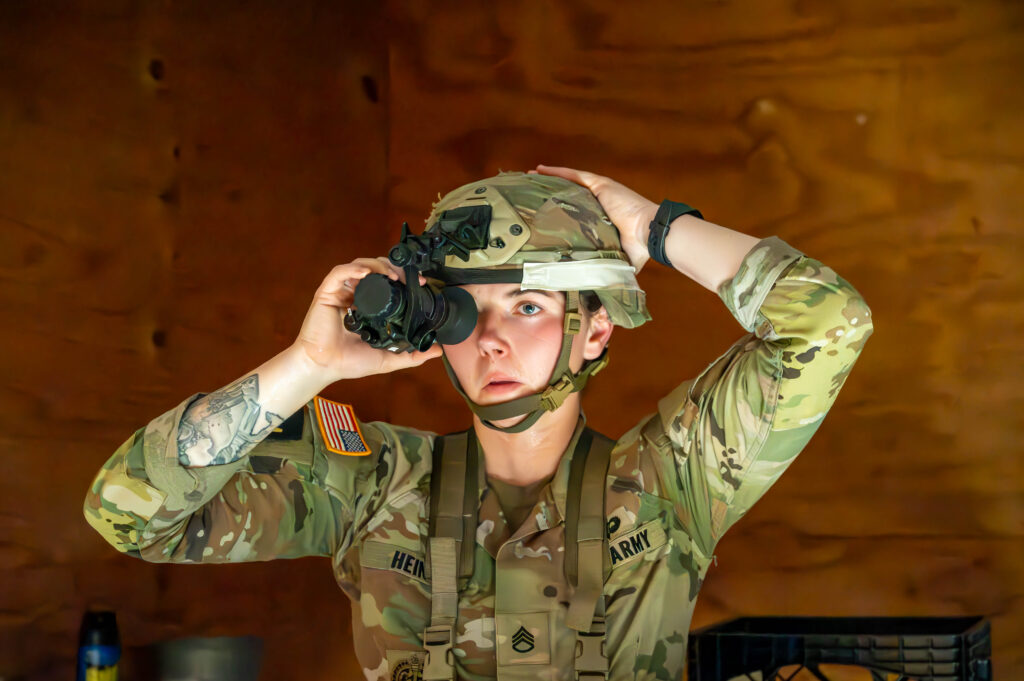
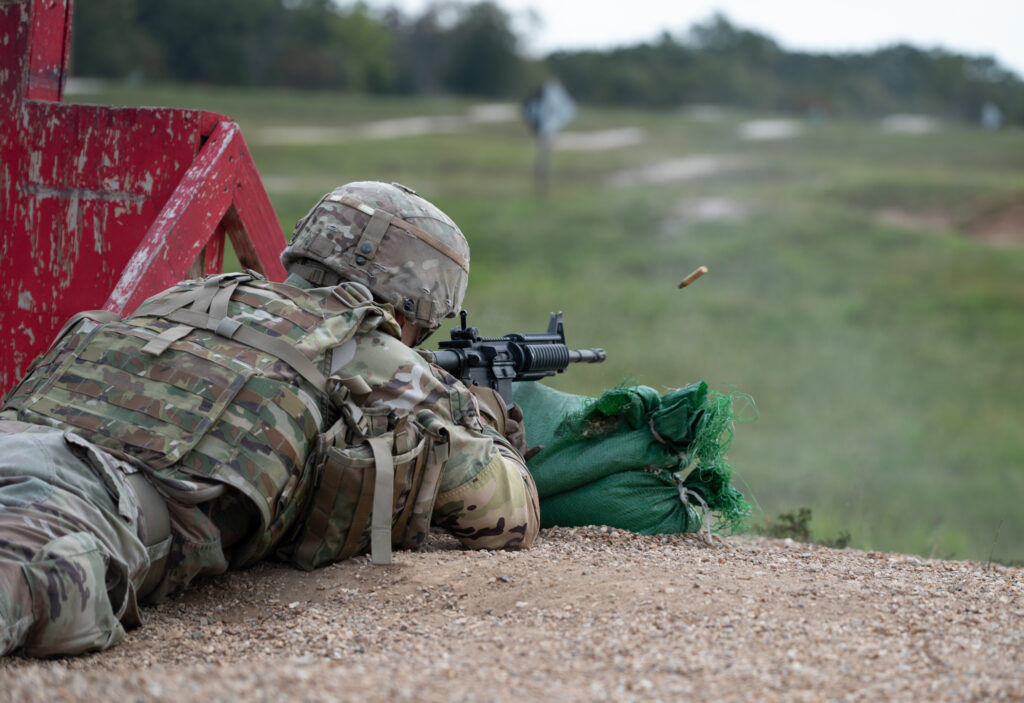
FORT LEONARD WOOD, Mo. (October 15, 2026) – Week 3 of U.S. Army Basic Combat Training pushed more than 100 Fort Leonard Wood recruits past their fears, transforming civilian mindsets into the Soldier spirit through a battery of milestone training events.
Company A, 3rd Battalion, 10th Infantry Regiment, 3rd Chemical Brigade trainees began the week honing their buddy team tactics and drill and ceremony precision before conquering the Confidence Course, CS Gas Chamber and Warrior Tower.
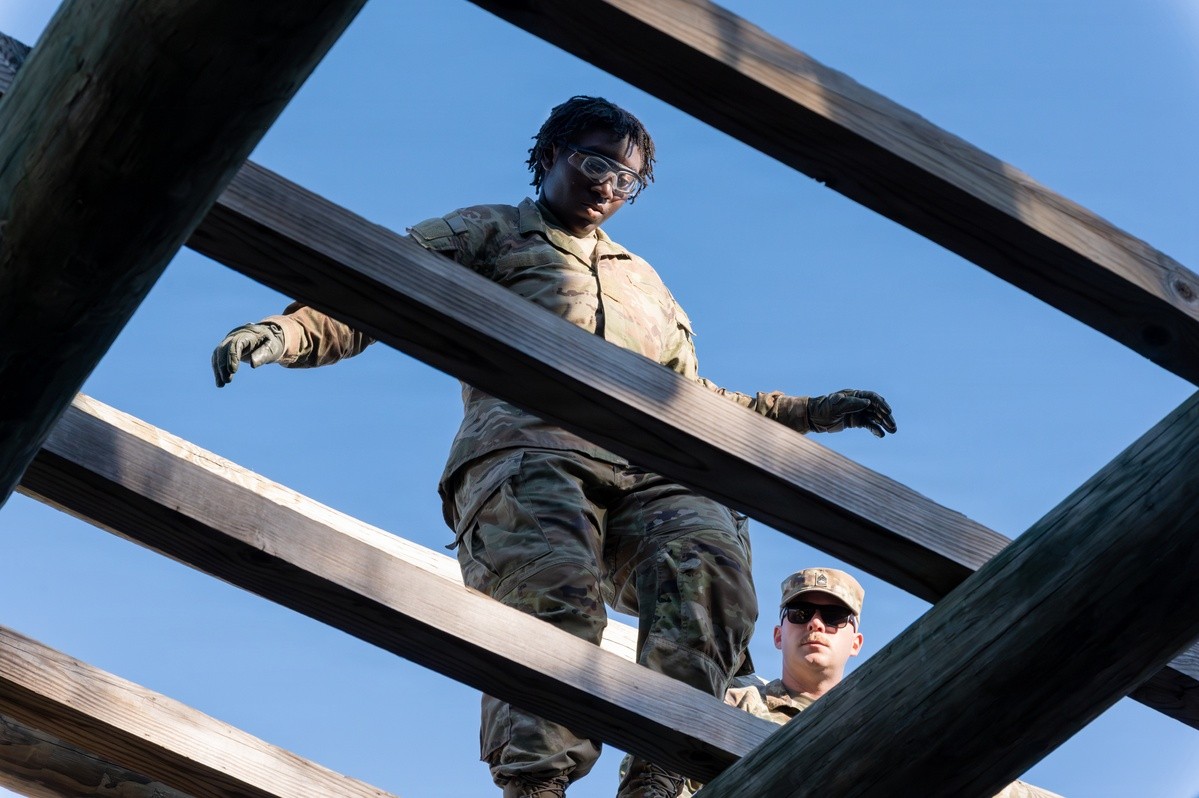
According to Sgt. 1st Class Trevor Gibbs, Company A senior drill sergeant, during buddy team tactics training the platoons organized into squads to navigate themselves and critical equipment across an actively evolving bridge structure while maintaining zero ground contact.
“We give trainees a scenario and allotted amount of time to meet mission requirements, such as bringing a barrel across a bridge that is one plank short,” Gibbs said. “It forces them to communicate and work together to continuously move people across with the barrel while the planks are also being moved to complete the bridge.”
He said the task builds critical thinking skills and teaches trainees to unite their diverse capabilities to overcome obstacles and complete the mission.
At the Confidence Course Oct. 7, 2026, platoons dispersed throughout Training Area 97 to negotiate high-risk obstacles. Key stations included high-altitude, multi-stage towers; low-crawl tire pits under barbed wire; reverse-incline rung descents; rope-swing log clearances; and sliding face-first during a steep rope-bridge.
Gibbs described the Confidence Course as a series of counterintuitive physical challenges that force recruits to think outside the box and push past mental limitations they place on their own physical abilities.
“Many of the obstacles feel unnatural, like crawling face first down a wooden ladder,” Gibbs said. “Once they accomplish the obstacles, they leave the training area with a sense of pride and achievement.”
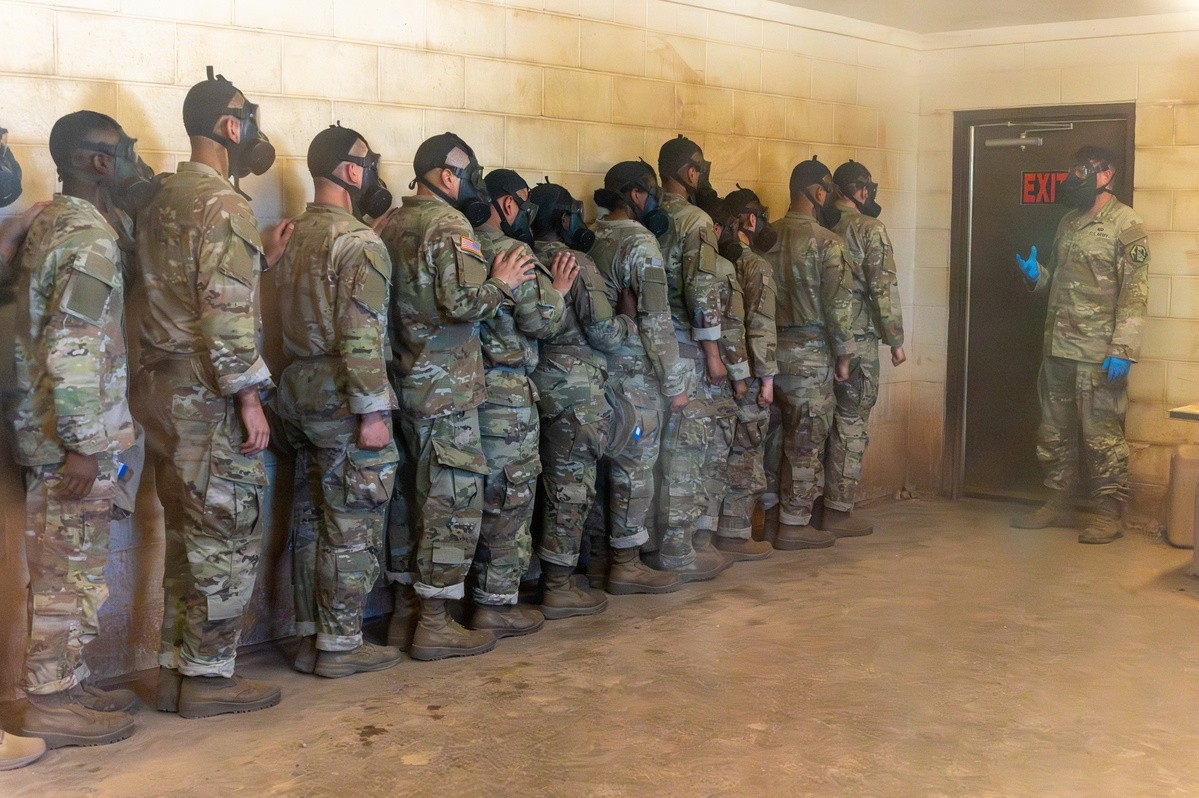
The next day, under a relentless and uncharacteristic October heat, trainees donned their M50 Joint Service General Purpose Masks and entered the chemical, biological, radiological and nuclear training area known as the CS Gas Chamber.
For Gibbs, a 74D chemical, biological, radiological, and nuclear specialist, the gas chamber stood out as a highlight of the Week 3 training schedule.
“Nobody freaked out or had to go through the gas chamber a second time. They did well,” Gibbs said. “I appreciate the depth of this training event because there is a physical aspect to the gas chamber when they break the seal of their masks, but it is mostly a mental challenge.”
As Gibbs and 1st Lt. Marquis Smith, Company A’s executive officer, vaporized CS tear gas tablets over the heating elements, the chamber filled with a stinging mist and trainees executed pressure-testing drills – such as running in place and scanning left and right – to prove they could function under a pending threat.
“I tried to pay attention as much as I could,” said Pfc. Yasmine Estevez, a Company A trainee who is pushing through BCT on her path to becoming an 88M motor transport operator.
Then the real test of discipline began as recruits were ordered to break the seal on their protective masks.
“Keep ’em above your nose, trainees,” roared the chamber cadre over the coughing of the recruits.
That first breath of gas inside the chamber marked a turning point for Estevez, proving she could survive the worst and keep pushing forward.
“That is when my composure went out the window, it was just survival instincts at that point. I couldn’t breathe or see,” Estevez said. “But then I realized I could hear the instructions, so I did my best to follow them and make my way out of the chamber.”
As the trainees stumbled out into the fresh air, their drill sergeants were waiting to herd them forward, bark instructions and motivate them to open their eyes and walk off the gas.
“Open your eyes. Flap your arms. Don’t touch your face,” yelled drill sergeants.
While the gas chamber is an experience few eagerly anticipate, Estevez was grateful to have confronted the training head-on, noting that she felt incredibly proud to have overcome the trial.
Estevez said the gas chamber was challenging, but less daunting than she anticipated.
She noted that her CBRN training experience was built on a foundation of trust, because being in the chamber with Gibbs and Smith demonstrated that her leadership does not just command – “they are facing the same battles they are preparing us to fight.”
Gibbs agreed.
“Leadership is from the front,” he said. “I am in the chamber with them because I am never going to require a trainee to attempt any task I would not do myself. That is part of our drill sergeant creed.”
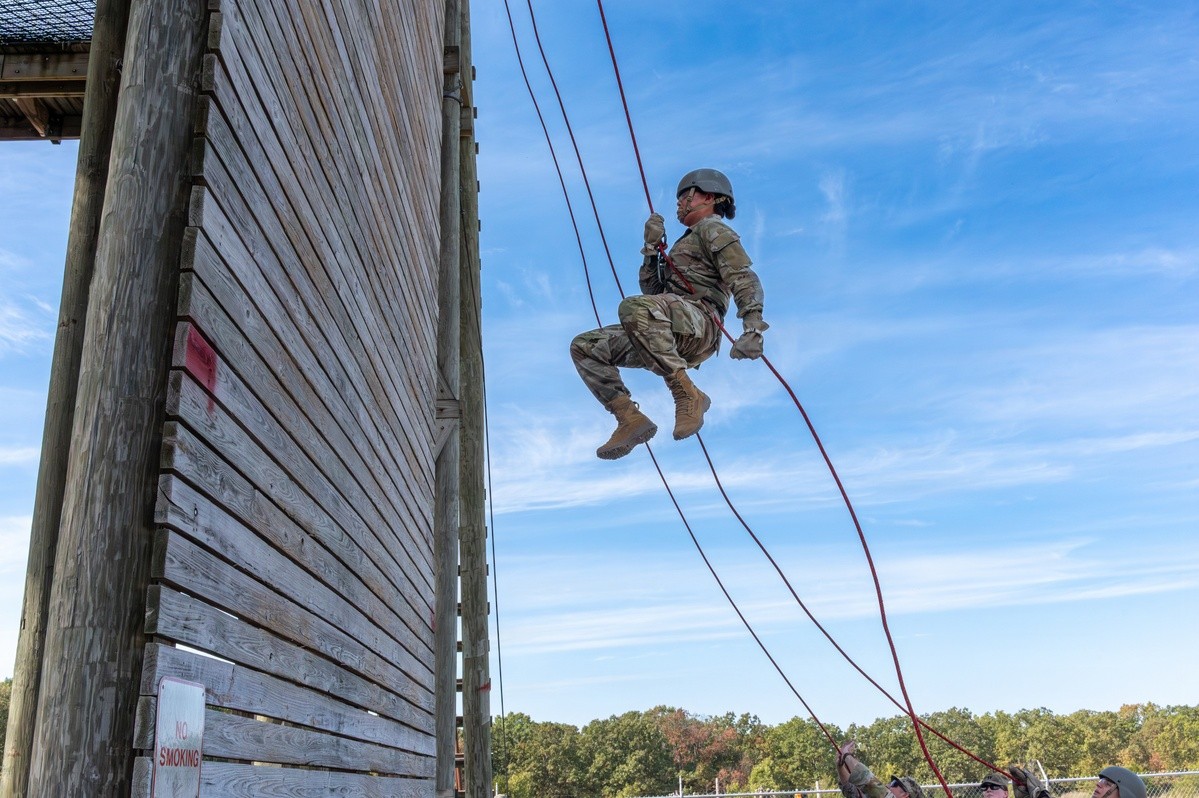
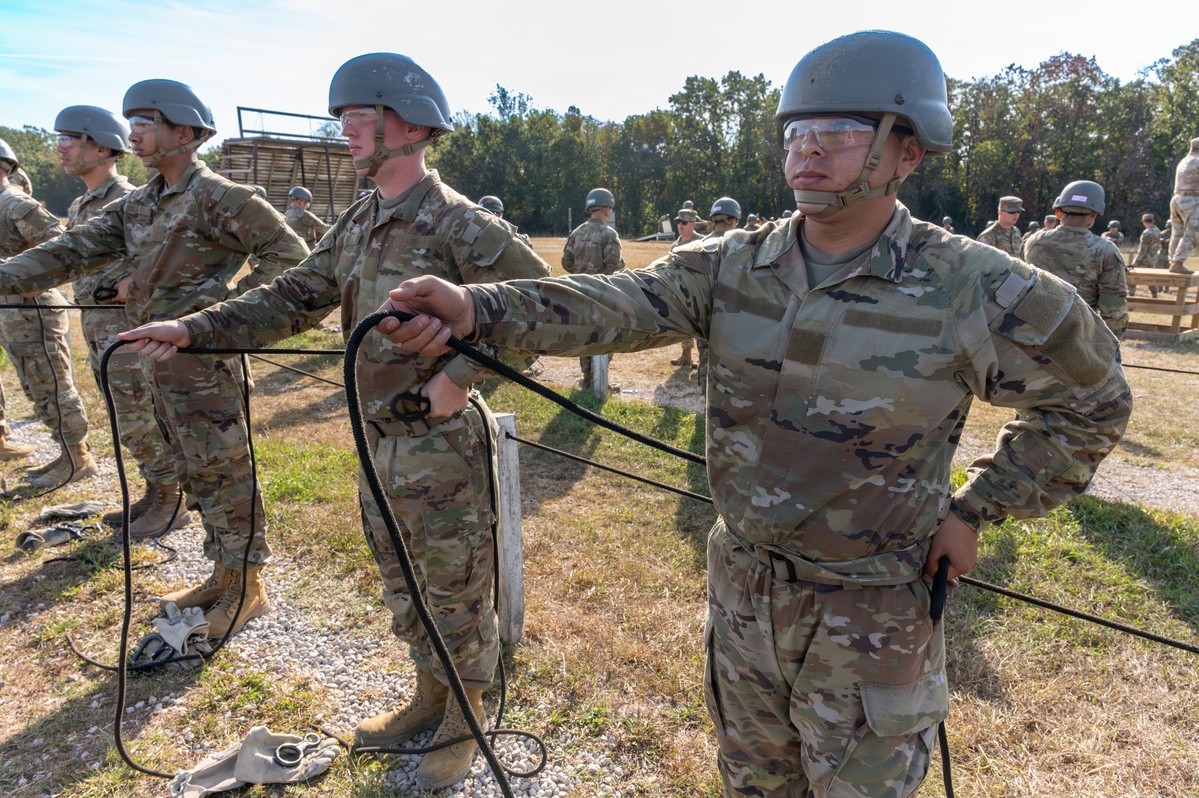
Recruits capped off Week 3 at Training Area 136 by mastering the Swiss seat – a hand-tied rope harness – before executing a 47-foot rappel down Warrior Tower.
Company A trainee, Pfc. Cheyenne Malone, in BCT to become a 12N horizontal construction engineer, said she enjoyed rappelling and wished she could go again.
“There were multiple drill sergeants checking our Swiss seats, so I felt confident I had tied mine correctly,” Malone said. “I was pretty nervous when I got up there and looked down, but as soon as my feet were on the ledge, I felt ready. I was hyped. It was awesome.”
More Week 3 photos are available to view on Fort Leonard Wood’s Flickr.
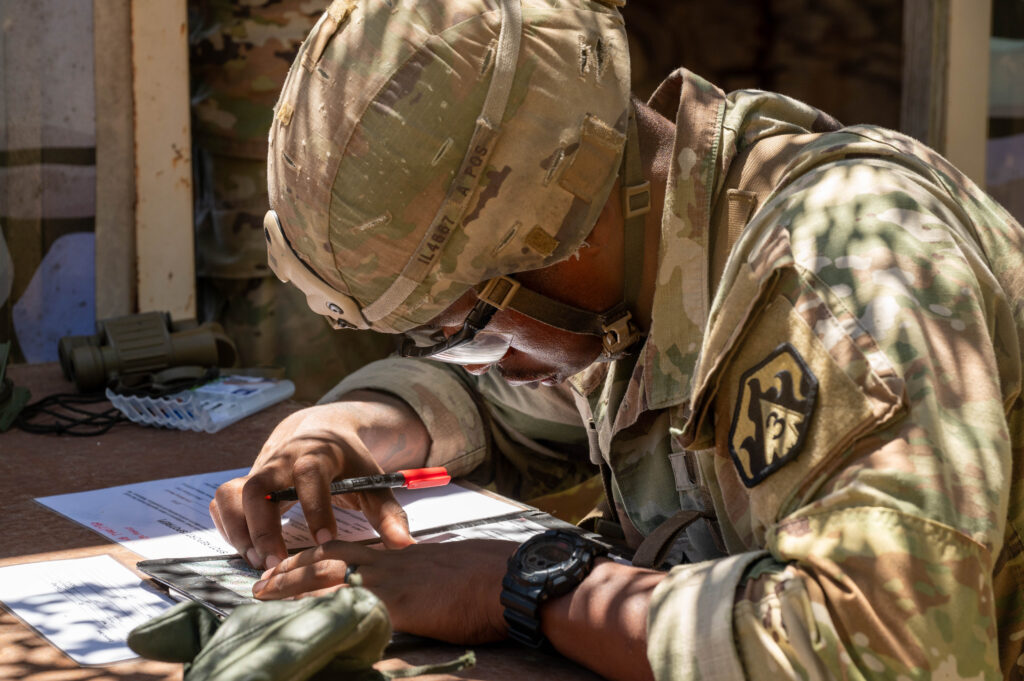
Gibbs said during Week 3, trainees also sat through a basic map reading class that served as a vital precursor to Week 4, when trainees transition away from the cantonment area to tackle land navigation and the Hammer Field Training Exercise.
-30-
About Fort Leonard Wood
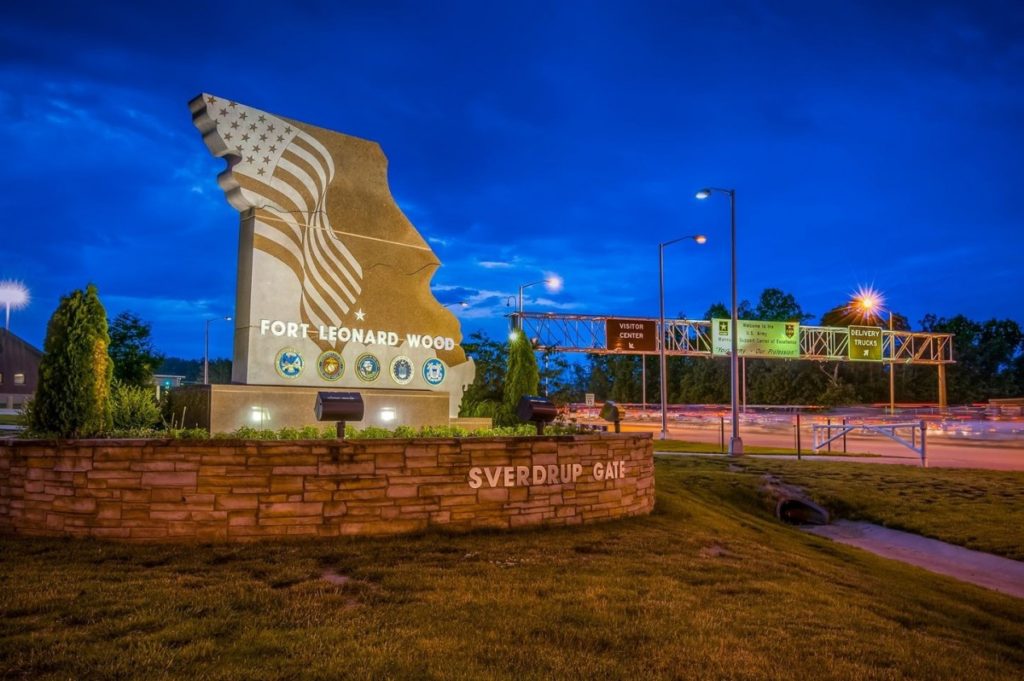
Fort Leonard Wood is a thriving and prosperous installation that has evolved from a small basic training post more than 75 years ago to a premier Army Center of Excellence that trains more than 80,000 military and civilians each year.
Fort Leonard Wood is home to the U.S Army Maneuver Support Center of Excellence and three U.S. Army schools: the U.S. Army Engineer School; U.S. Army Chemical, Biological, Radiological and Nuclear School; and the U.S. Army Military Police School. In addition to training engineer, CBRN and military police specialties for the Army, Fort Leonard Wood also provides gender-integrated in-processing and Basic Combat Training for new Soldiers.
Fort Leonard Wood also hosts and trains with the largest Marine Corps Detachment and Air Force Squadron on any Army installation as well as a large Navy construction detachment.
More information about Fort Leonard Wood is at: https://home.army.mil/wood/index.php/about/mission