By Ryan Thompson, Fort Leonard Wood Public Affairs Office
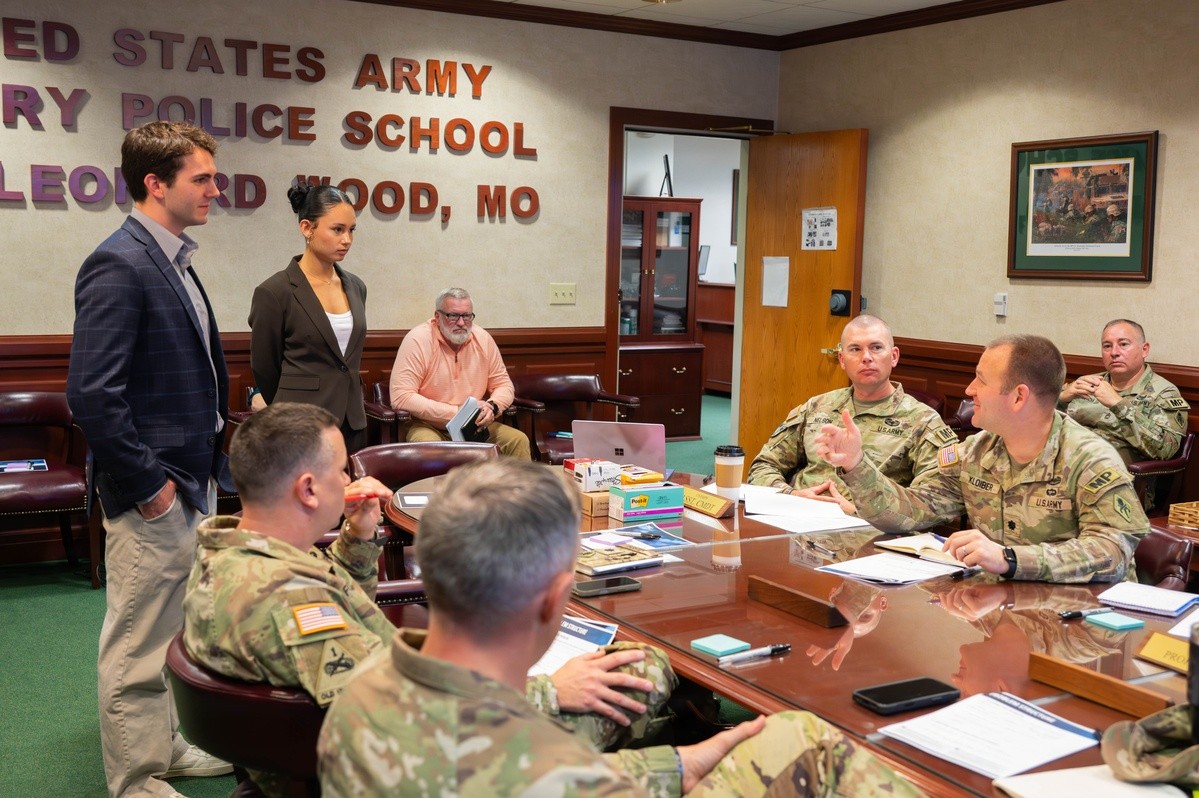
FORT LEONARD WOOD, Mo. (November 19, 2026) – Thirteen Soldiers with the U.S. Army Military Police School participated in a Hacking for Defense problem-sourcing seminar through the Defense Innovation Unit Nov. 9, 2026, in the USAMPS conference room.
Known as H4D, Hacking for Defense connects university student teams with real-world national security challenges, according to Meaghanne Ruiz, Innovation with Academia, H4D Problem Sourcing and Curation project manager.
“Using lean innovation methodologies, students work with military problem owners, academic faculty and defense mentors to investigate operational challenges and develop actionable solutions,” Ruiz said.
The purpose of the seminar, she added, is “to help identify and refine operational challenges that may be addressed through future H4D university partnerships, connecting mission needs with university talent to explore innovative solutions.”
Those participating in the seminar identified problems they think the program should tackle. From there, the H4D program analysts will take the suggested problems and evaluate them to determine if they are feasible and viable to develop solutions for.
Erin Lemus, H4D program analyst, said the team uses the following questions when choosing a problem to work.
“Is this a problem that multiple people are facing? Are multiple people trying to find an end solution to this? Is this something that the university students can actually make an impact on within a 10- to 14-week semester? Is there a pathway for the university students to continue to make an impact on post course. Is their end solution going to make a difference, or is there a pathway to make a difference?”
Once they have identified a problem, Christopher Lesley, H4D program analyst, said his job is to understand that problem and then connect the warfighter, also referred to as the mission partner, with a university.
“We provide to the warfighter a student team of five, doing research over the course of a semester and then an existing network of people interested in solutions for that problem,” he said.
Throughout the semester, those students will work directly with the Soldier to solve the problem. “(The warfighter) is acting as the university research team’s main point of contact for that semester,” Lemus said.
“They can provide the university research teams with hands-on work and equipment or prototypes,” she said.
With student teams, Lesley added that Soldiers get a fresh perspective from a wide range of different perspectives.
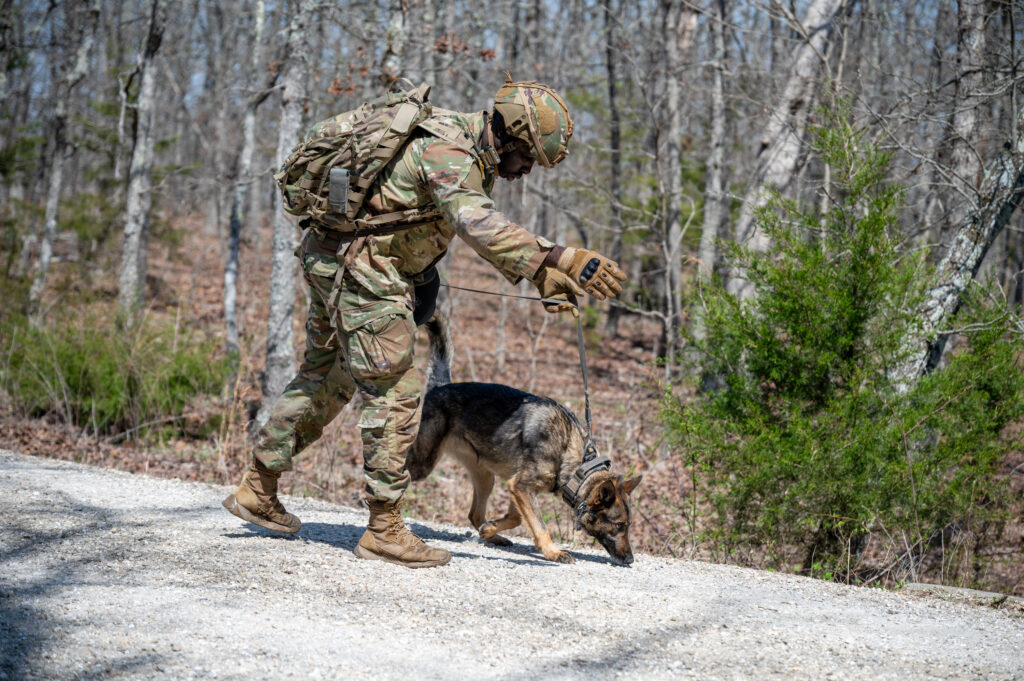
Sgt. 1st Class Leivon Miramontes, Law Enforcement Training Division operation noncommissioned officer in charge, who attended the seminar, agrees.
“It gives us the ability to have our problems looked at through a different lens,” he said. “It gets us away from the ‘this is how we have always done it’ mindset. Fresh eyes to the same problem can result in a better outcome.”
Lesley said the program offers Soldiers a good return on investment because of the amount of time the students spend on their projects during the semester.
“It’s more of a time commitment than other classes because with this team of five students, each person is supposed to be putting in about 10 hours of work every week,” Lesley said. “The value problem is one hour of the mission partner’s time per week guiding the students to solve their problem, and they are getting back about 50 hours of work every week from the students.”
Lesley said it is rewarding seeing the evolution of all the different problems he has had the opportunity to work on.
“I think we are making a real impact, I do a lot of interviews with warfighters who are passionate about the solutions they are trying to get implemented,” he said. “It is always interesting to hear what they are experiencing and work to understand what that problem is.”
“As we work with student teams, we can see the evolution of here is the problem and here is where the student team took it,” he added.
-30-
About Fort Leonard Wood
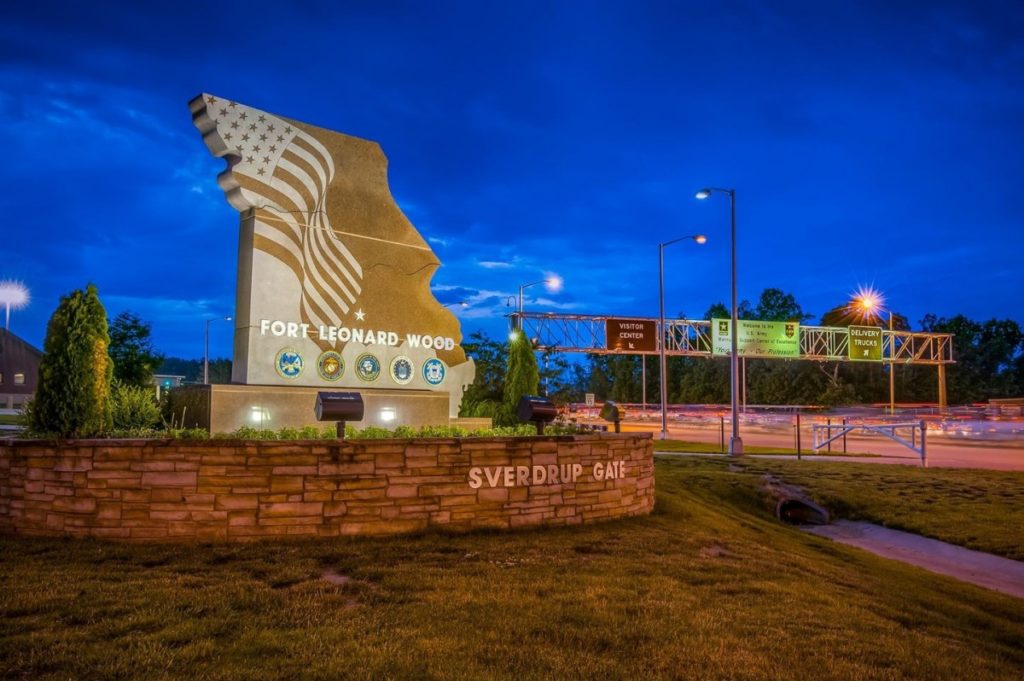
Fort Leonard Wood is a thriving and prosperous installation that has evolved from a small basic training post more than 75 years ago to a premier Army Center of Excellence that trains more than 80,000 military and civilians each year.
Fort Leonard Wood is home to the U.S Army Maneuver Support Center of Excellence and three U.S. Army schools: the U.S. Army Engineer School; U.S. Army Chemical, Biological, Radiological and Nuclear School; and the U.S. Army Military Police School. In addition to training engineer, CBRN and military police specialties for the Army, Fort Leonard Wood also provides gender-integrated in-processing and Basic Combat Training for new Soldiers.
Fort Leonard Wood also hosts and trains with the largest Marine Corps Detachment and Air Force Squadron on any Army installation as well as a large Navy construction detachment.
More information about Fort Leonard Wood is at: https://home.army.mil/wood/index.php/about/mission